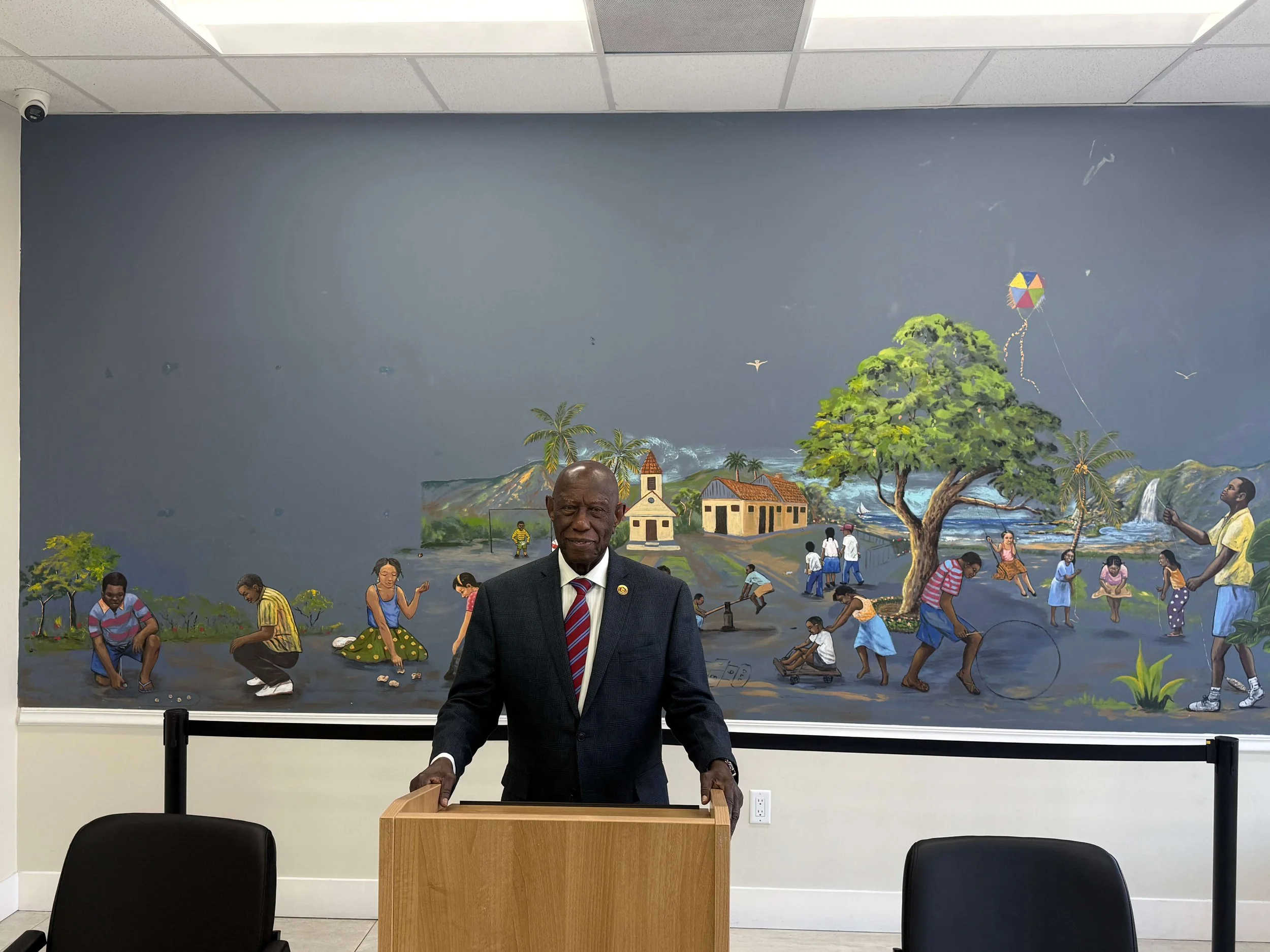
The art and legacy of Dr. Francois R. Gracia.
We Love You
My Story
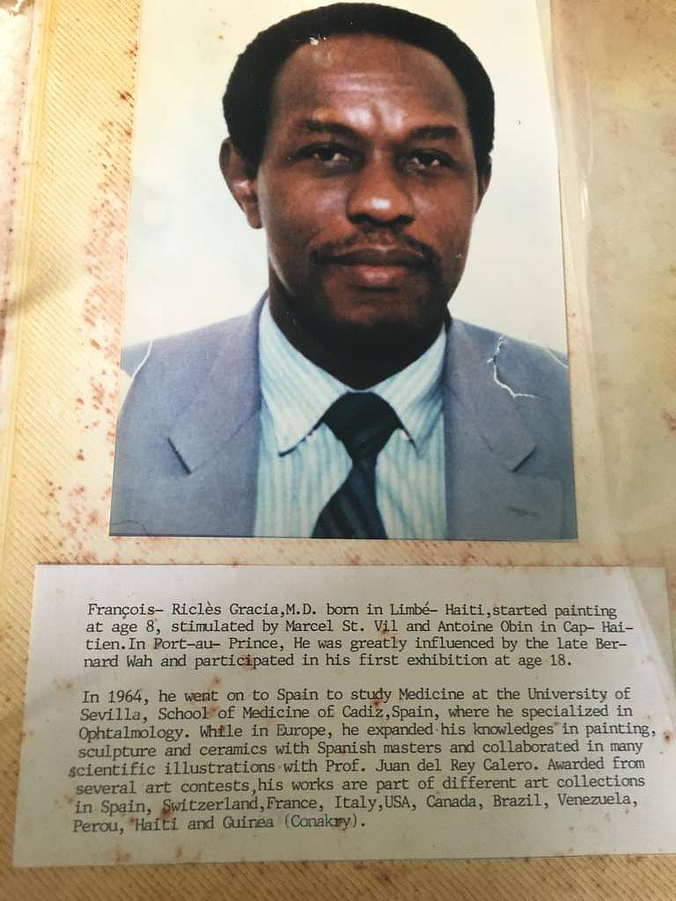
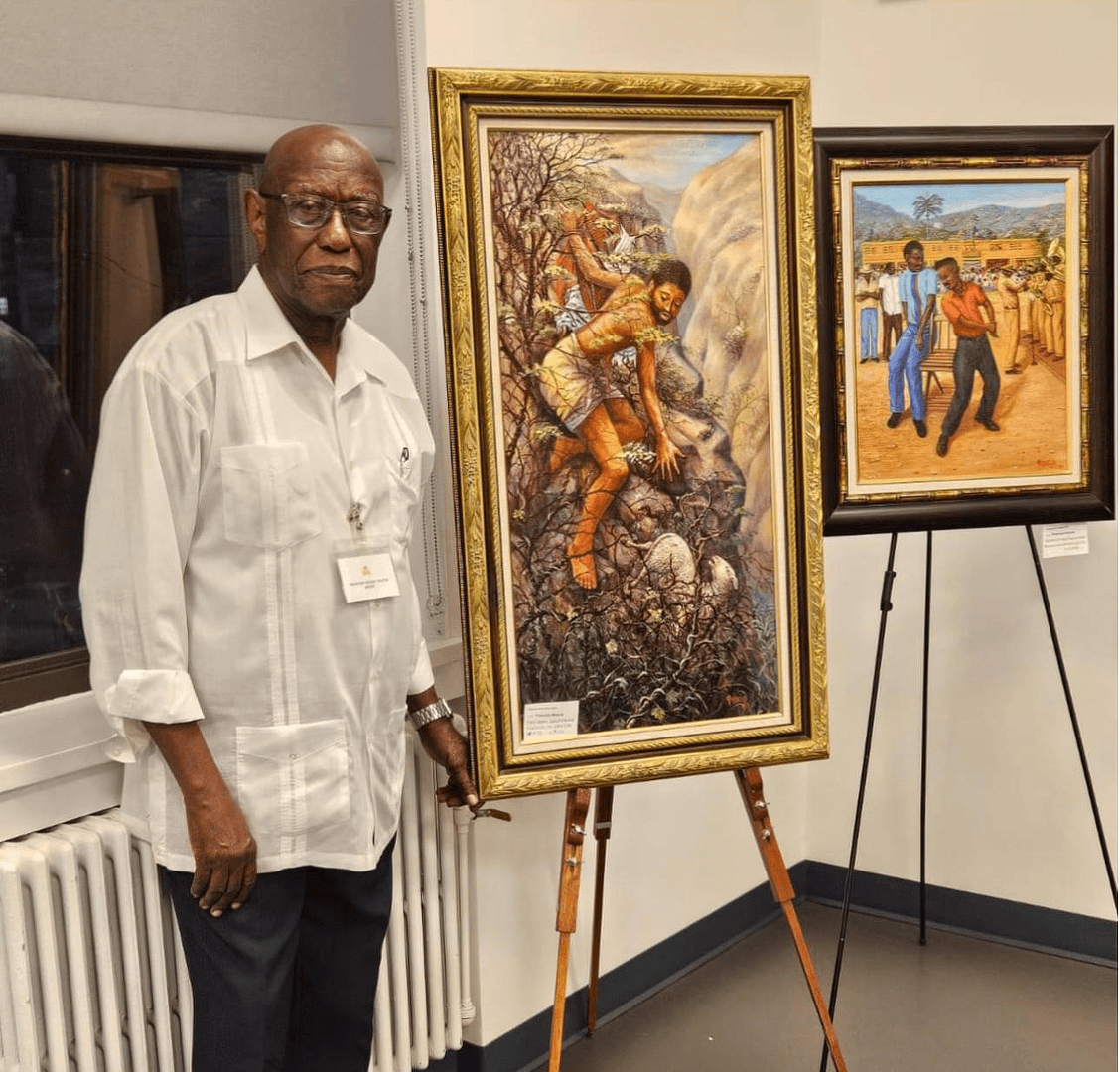
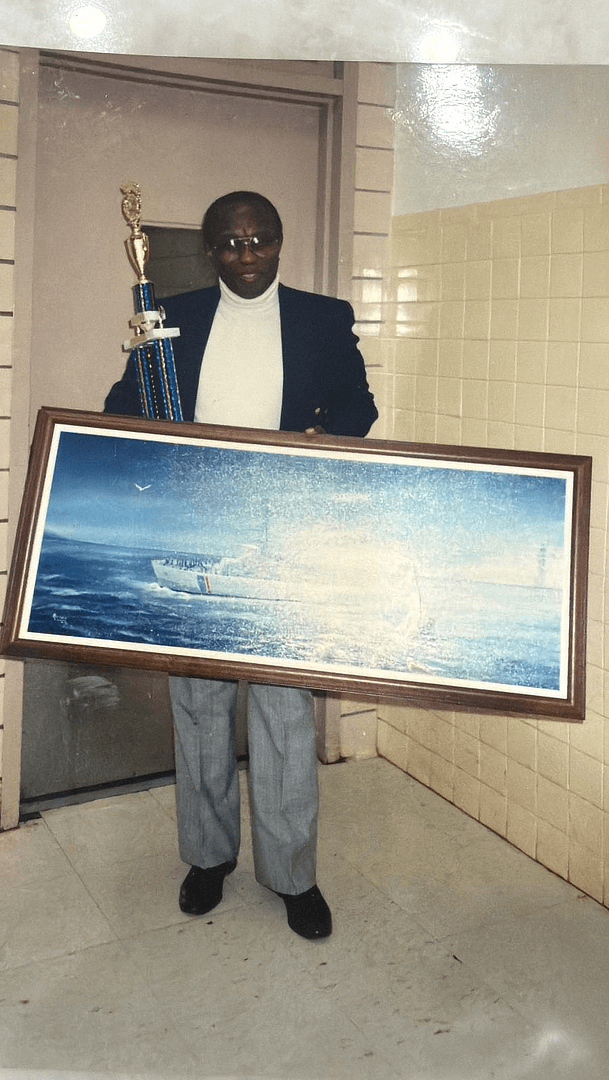
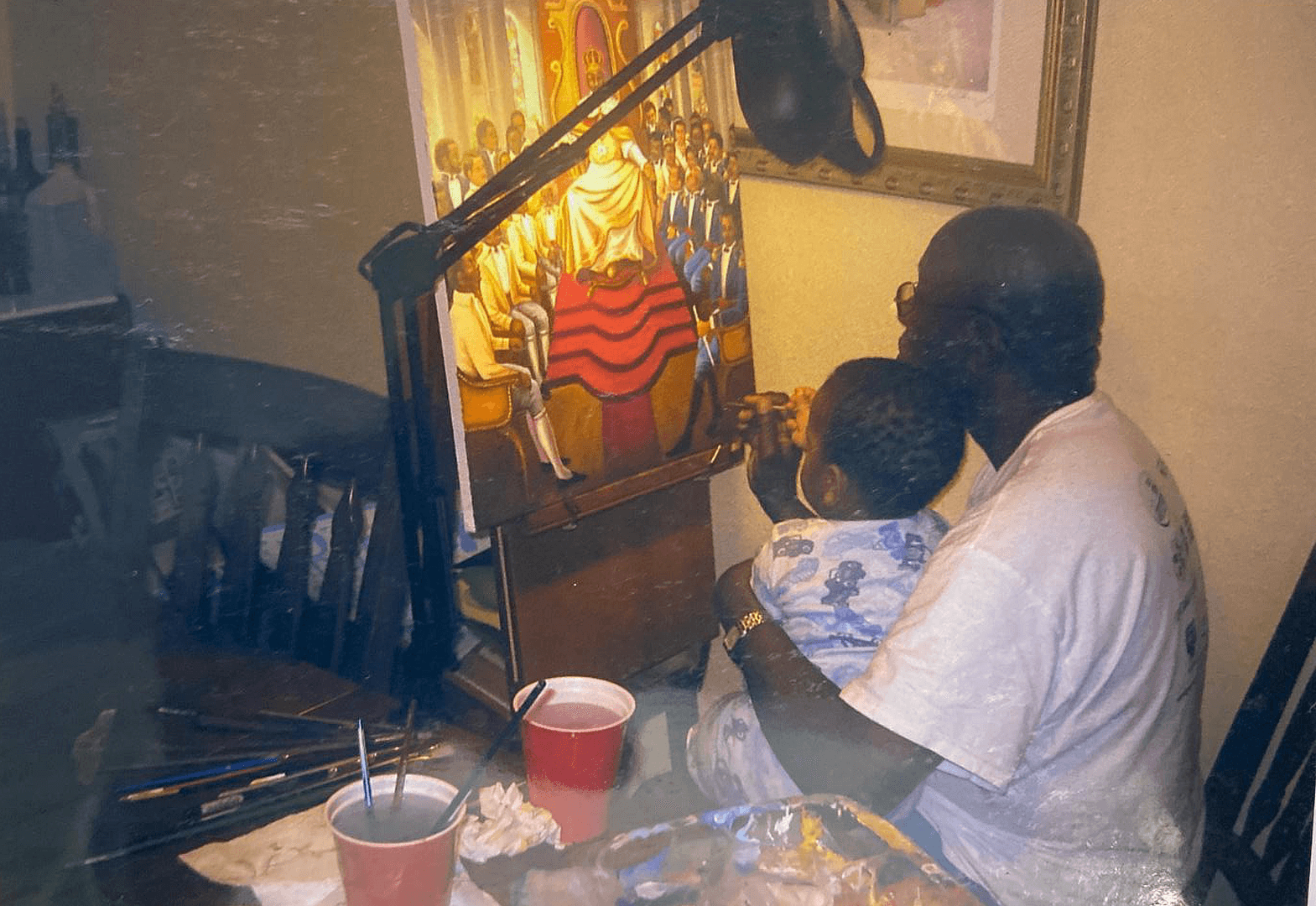
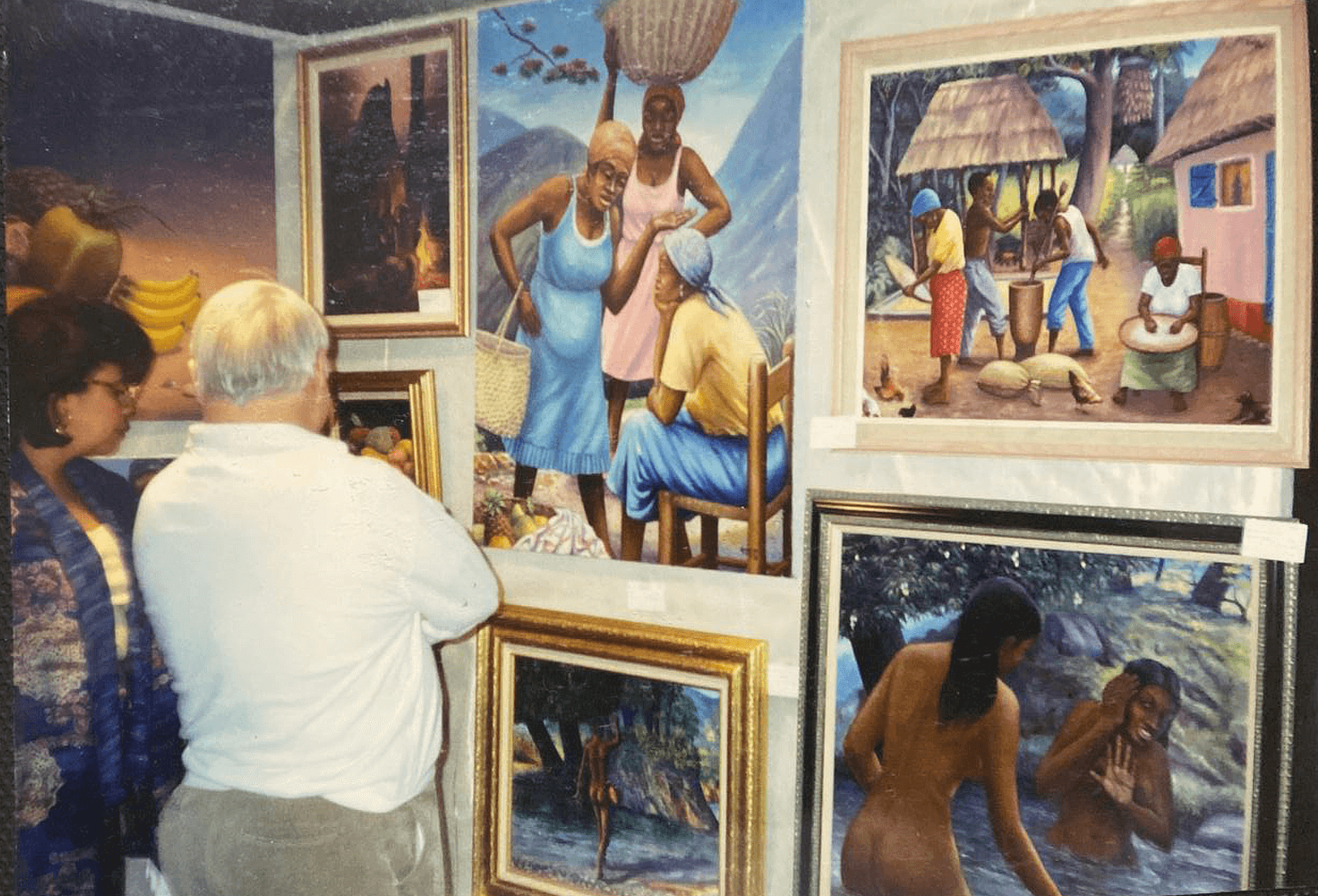
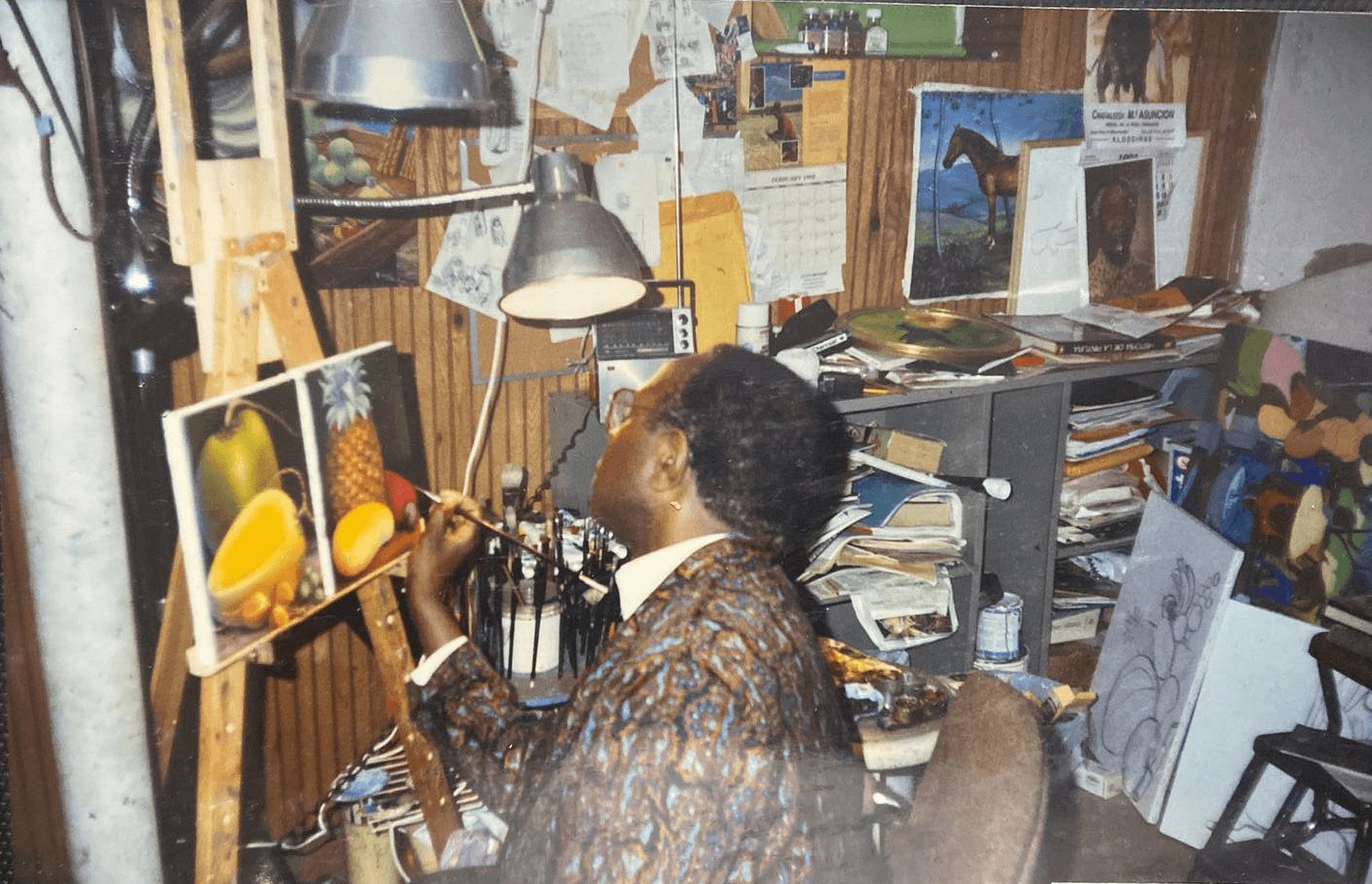
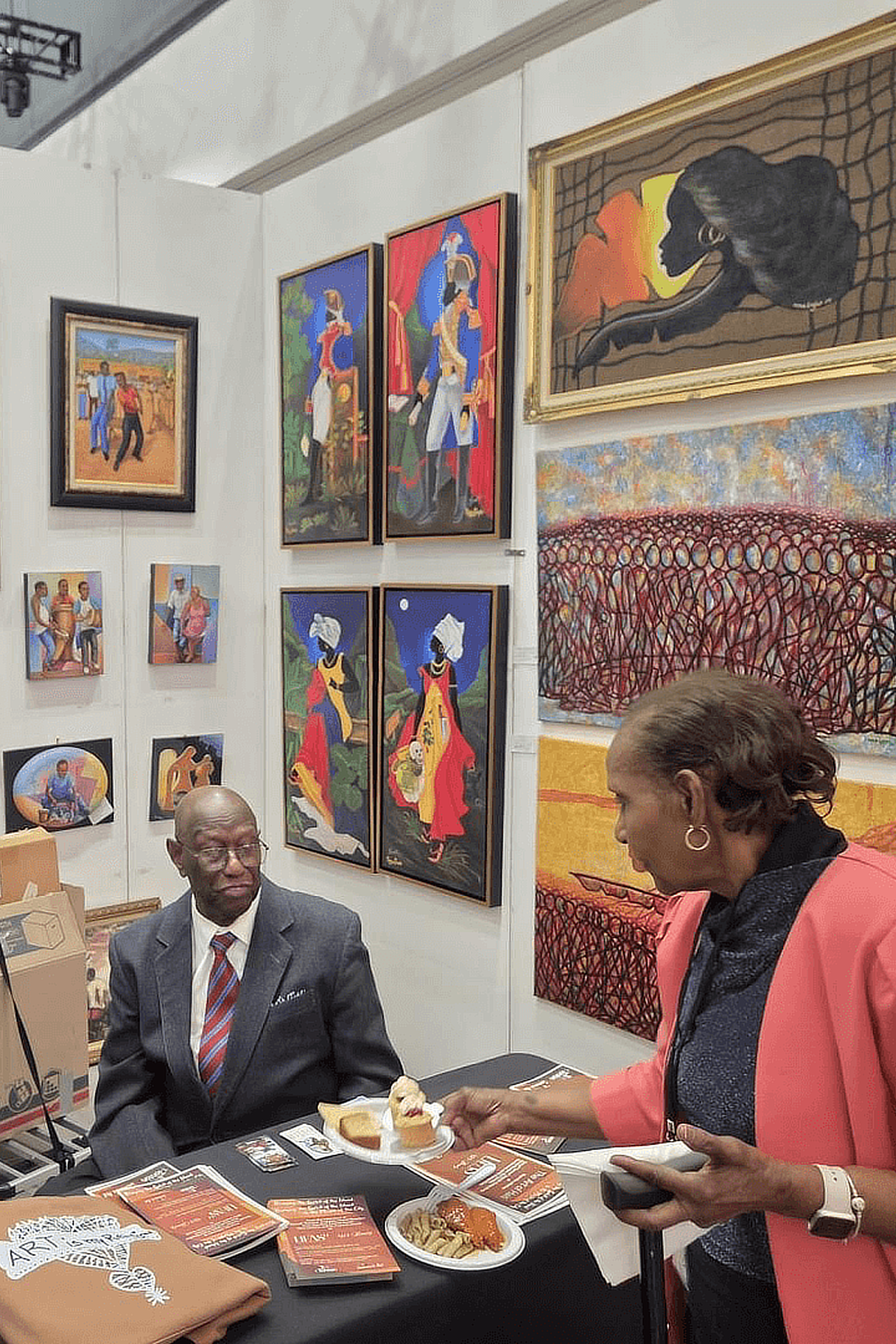
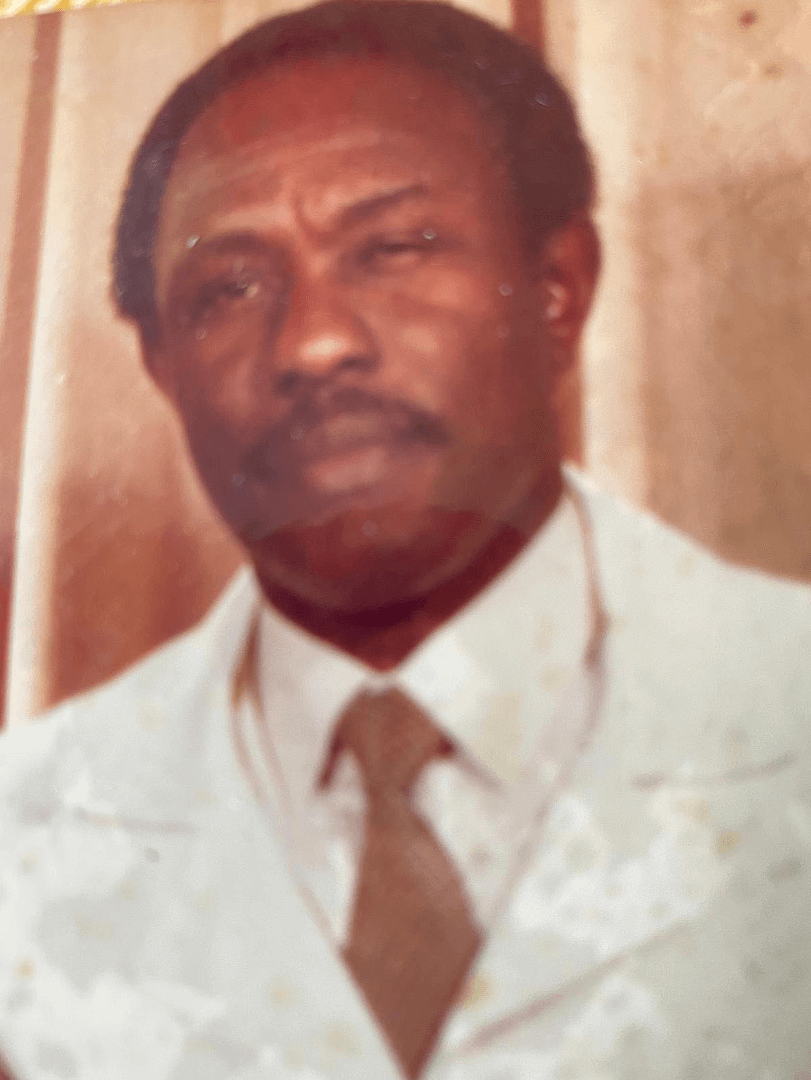
Born in Limbé, Haiti in 1940, Dr. Gracia began painting at age seven and exhibited nationally by eighteen. Trained as an ophthalmologist in Spain, he simultaneously refined his artistic practice in painting, sculpture, and ceramics, earning international awards and placement in collections across Europe, the Americas, and Africa. Drawing from memory and lived experience, his work vividly portrays the dignity, resilience, and daily life of the Haitian people. His artistic language blends Neoclassicism, Lyrical Romanticism, and Symbolism. Click here for full bio
Syncretism Oil in Canvas
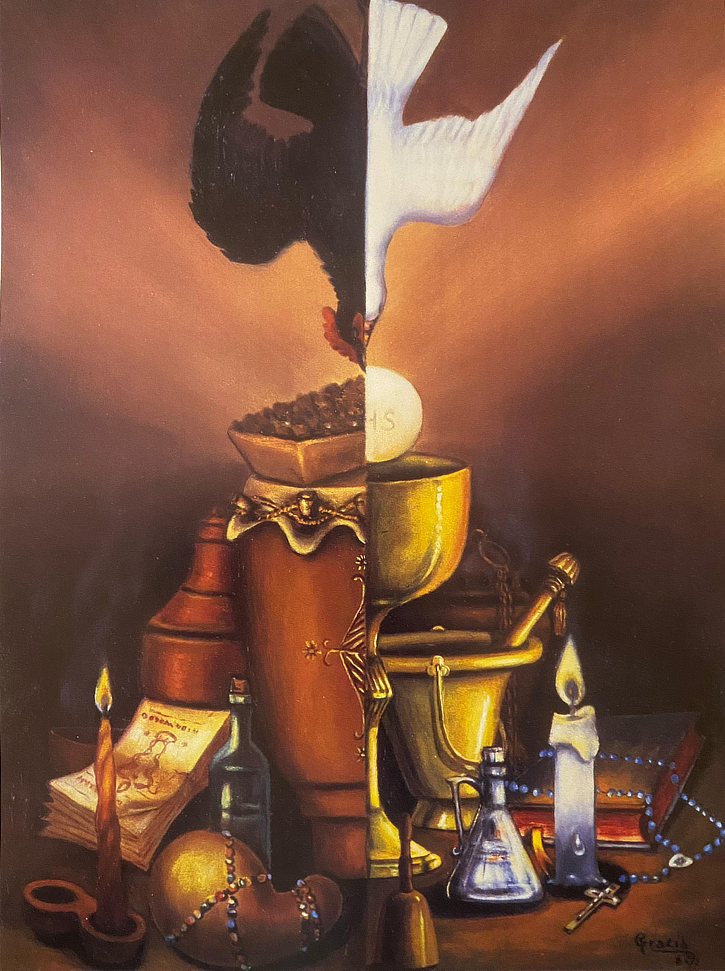
Syncretism explores Vodou as the spiritual inheritance of our African ancestors—carried across the Atlantic through the slave trade—and its fusion with Catholicism, the religion imposed by colonization. The painting reflects the convergence of belief systems born from survival, resistance, and adaptation, revealing a sacred dialogue between ancestral African spirituality and Christian iconography.
A L’HAÏTIENNE (The Haitian Way)
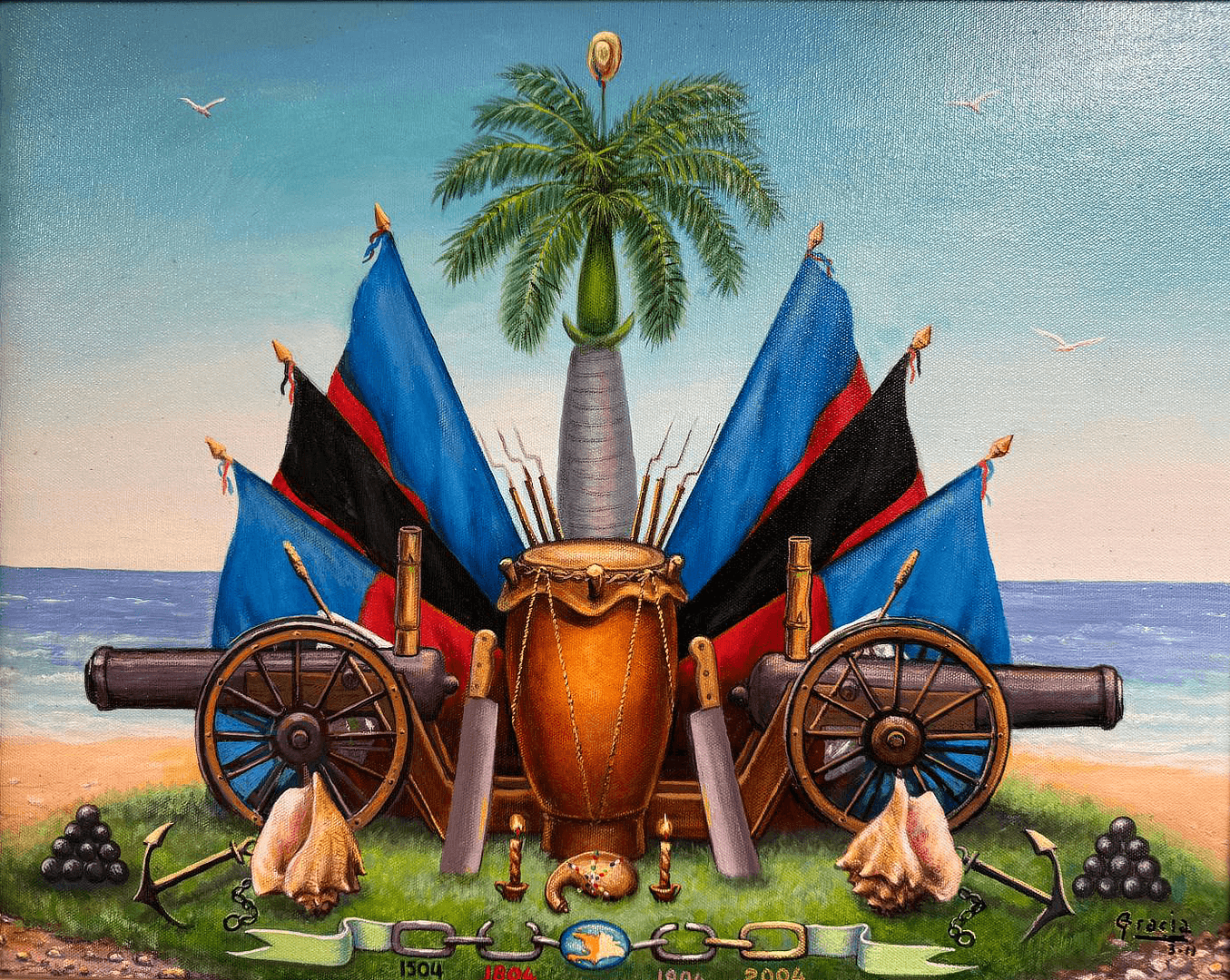
This painting depicts the key stages in the creation of the Haitian flag. It begins with General-in-Chief Jean-Jacques Dessalines tearing the white band from the French tricolor, symbolizing the break from colonial rule. He later replaced the blue with black while keeping the vertical layout. Finally, General Alexandre Pétion restored the colors to their current form—blue above red in a horizontal arrangement—adding a white square with the coat of arms at the center and the motto “L’union fait la force” (“Unity Makes Strength”).
Beyond illustrating the flag’s evolution, the painting reinterprets its symbols through Haitian culture and history. The Phrygian cap is replaced with a peasant’s straw hat, while drums, bamboo vaksin, machetes, and conch shells substitute French instruments as tools of communication and resistance. Spiritual elements such as the Ason and candlelight evoke the enslaved people’s inner strength. The motto is replaced by chain links marked with pivotal dates—1504 (the beginning of the slave trade), 1804 (independence and freedom), 1904 (renewed oppression through internal conflict and foreign interference), and 2004 (the persistence of modern economic bondage).
Liberty and Compassion
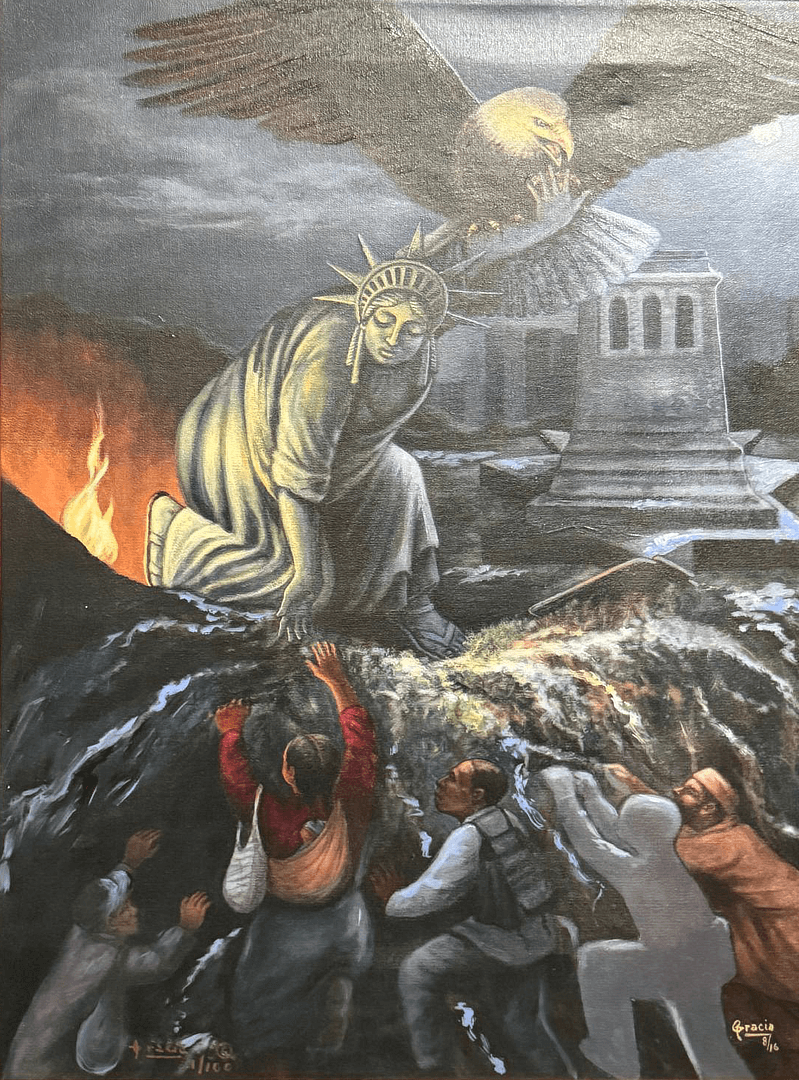
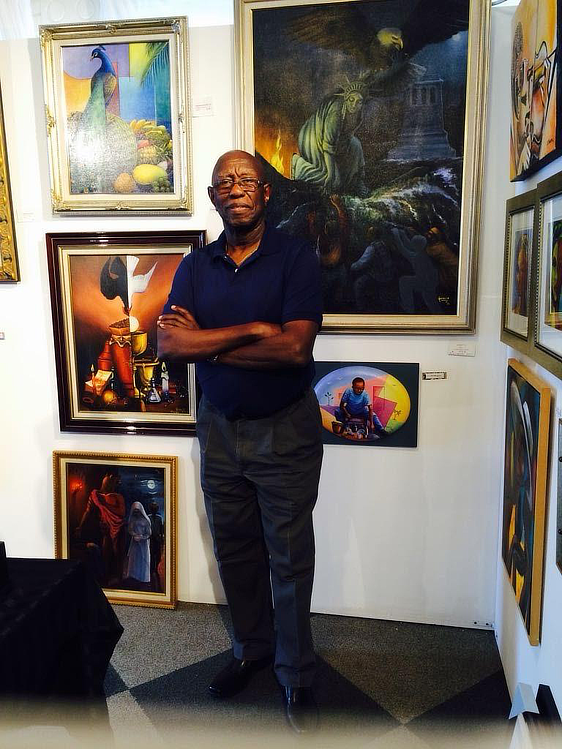
Lady Liberty Helping the Immigrants from the Eagle shows Lady Liberty protecting immigrants from danger beneath a threatening eagle. The scene reflects the struggle between America’s ideals of freedom and the harsh realities faced by immigrants, while honoring their resilience and hope.
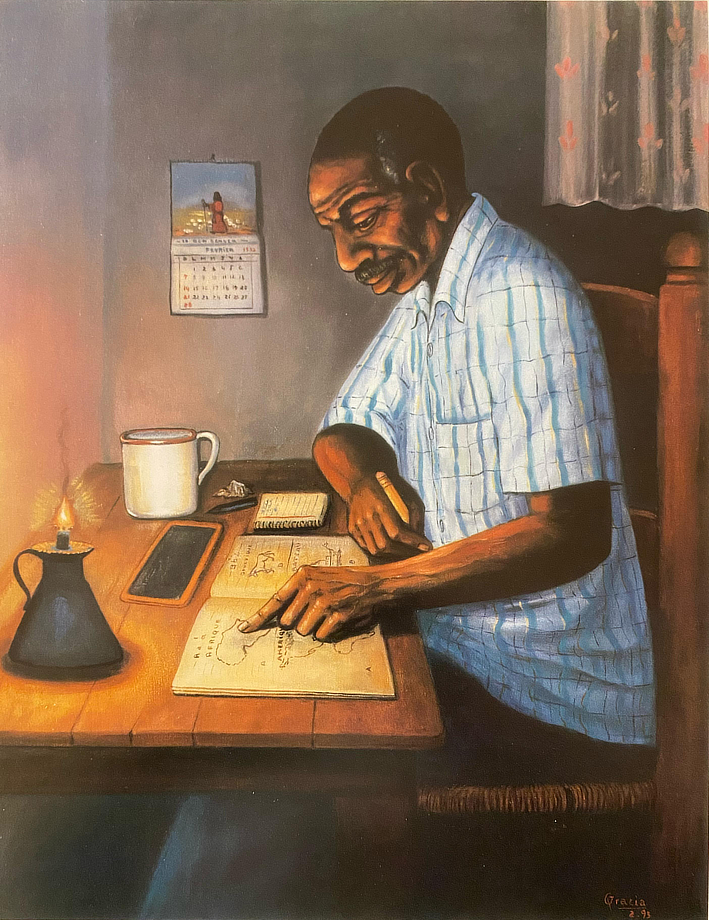
Never Too Late
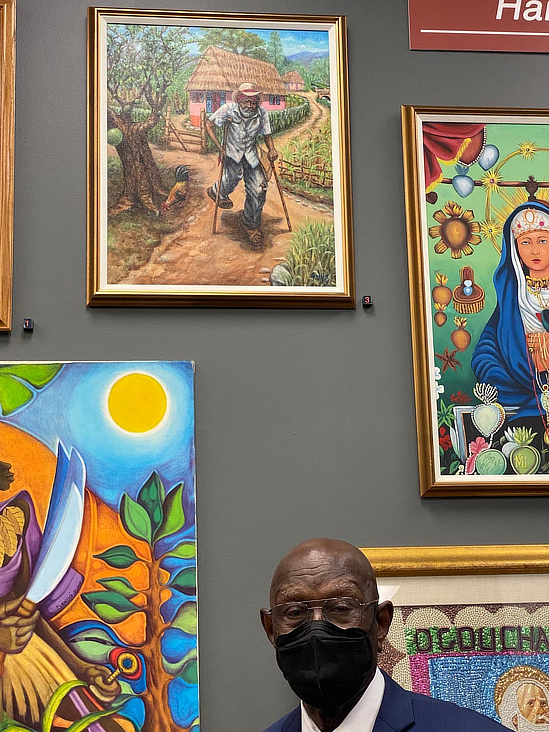
This painting depicts an elderly man learning to read and write later in life. It emphasizes that age is not a barrier to learning or new beginnings. The work honors perseverance, dignity, and the lifelong ability to grow and transform.
My Art
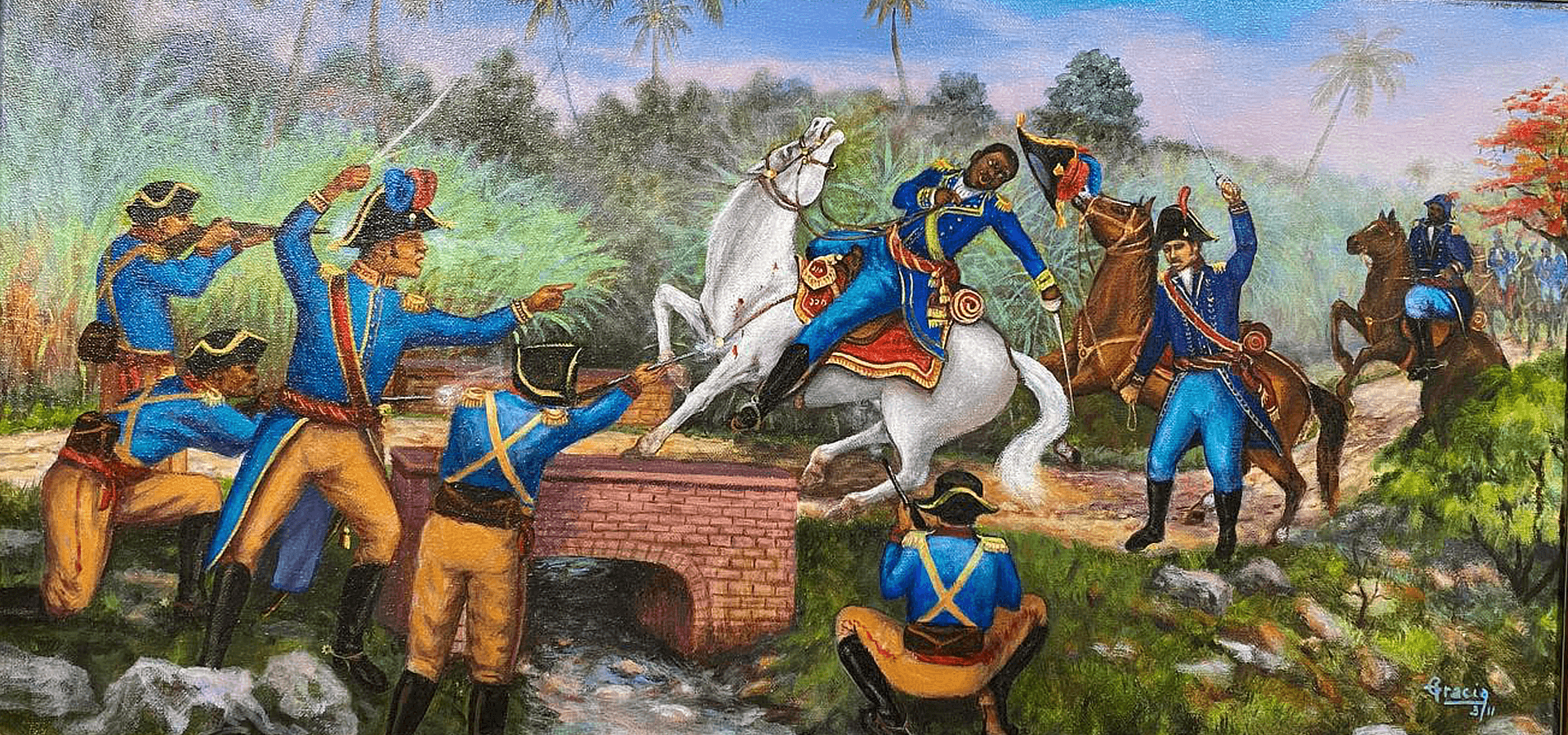
Dessalines’ Assassination
This painting depicts the assassination of Jean-Jacques Dessalines, founder of the Haitian nation, capturing the violence and betrayal that followed independence. Through dramatic movement and confrontation, the work reflects the tragic cost of power struggles and the fragility of unity in a newly freed country.
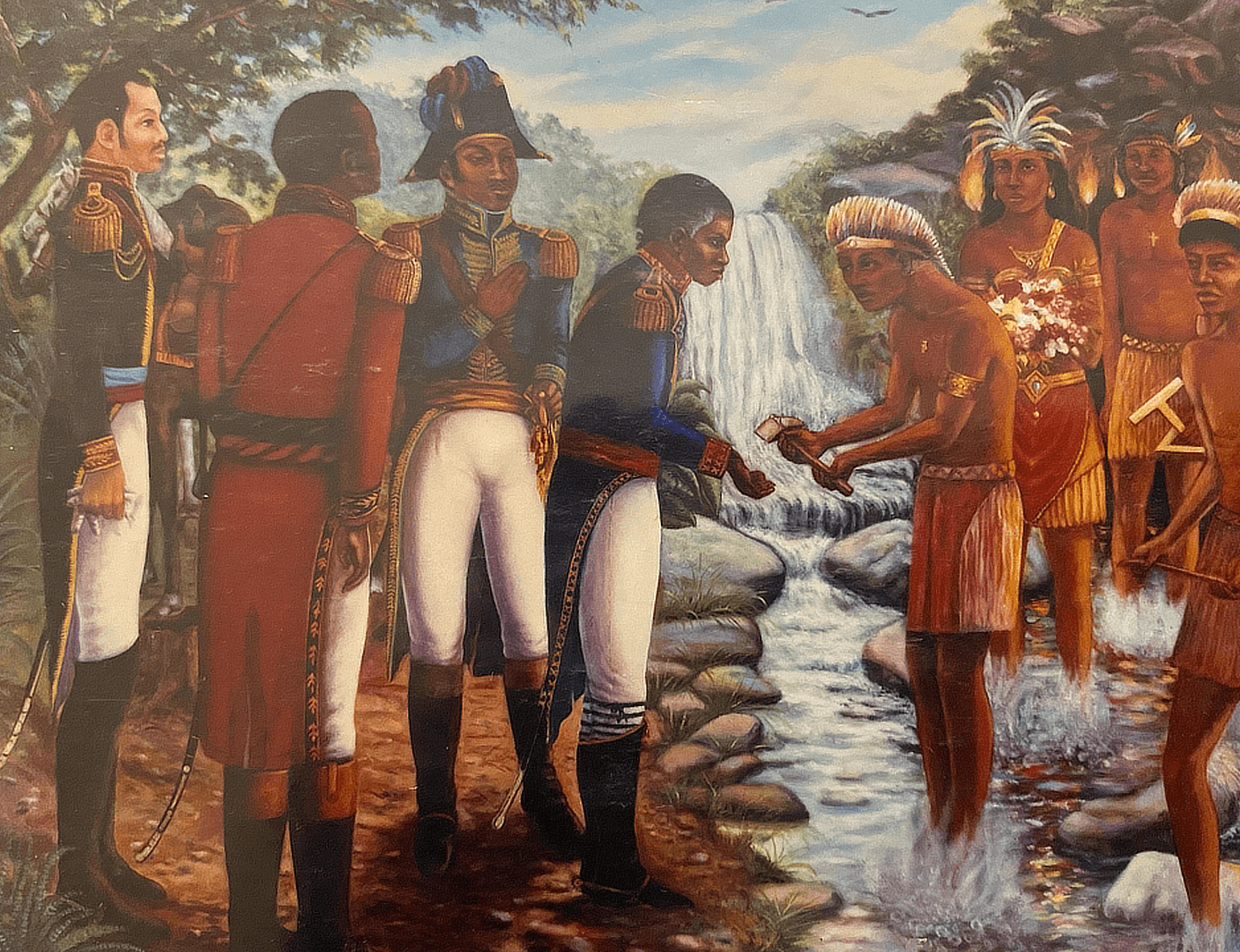
The Secrets of Haiti
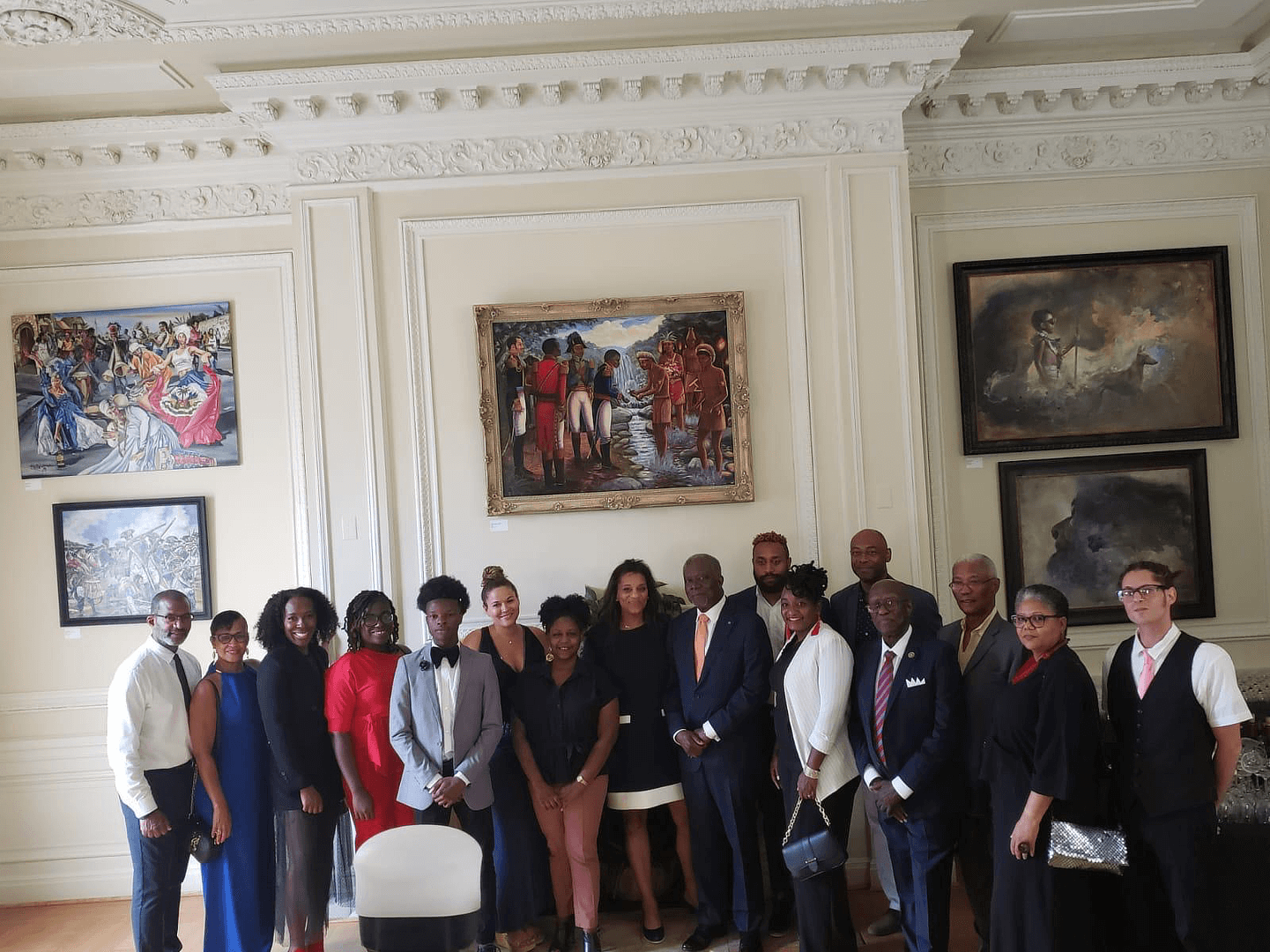
This painting brings together Haiti’s founding heroes and Taíno caciques to symbolize the transfer of ancestral wisdom and responsibility. Through symbolic gifts of war, peace, unity, and labor, it reflects the values that shaped the nation’s leaders. The scene unites Indigenous legacy and revolutionary struggle into a story of resilience and hope.
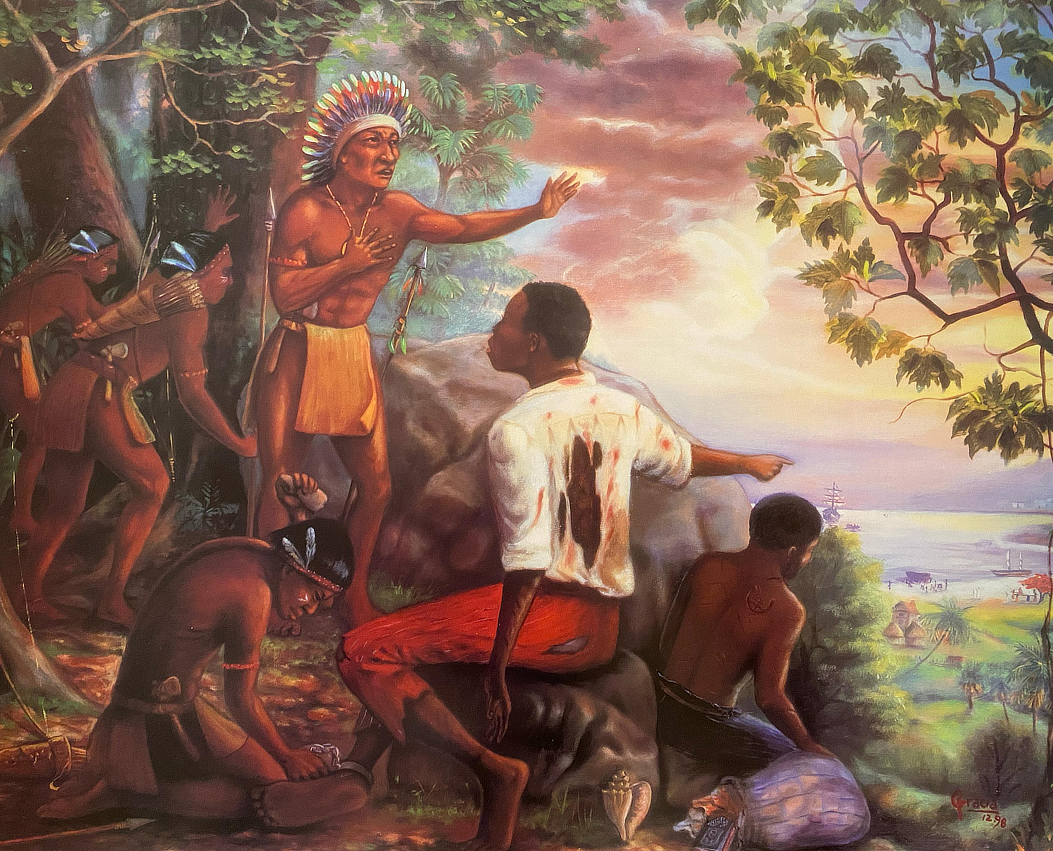
Mutual Complaints
This painting shows an encounter between Taíno Indians and two escaped enslaved Africans, each sharing their pain and loss. The moment reflects empathy and recognition of shared suffering between two oppressed peoples. It highlights early bonds that helped shape resistance, solidarity, and a new society.
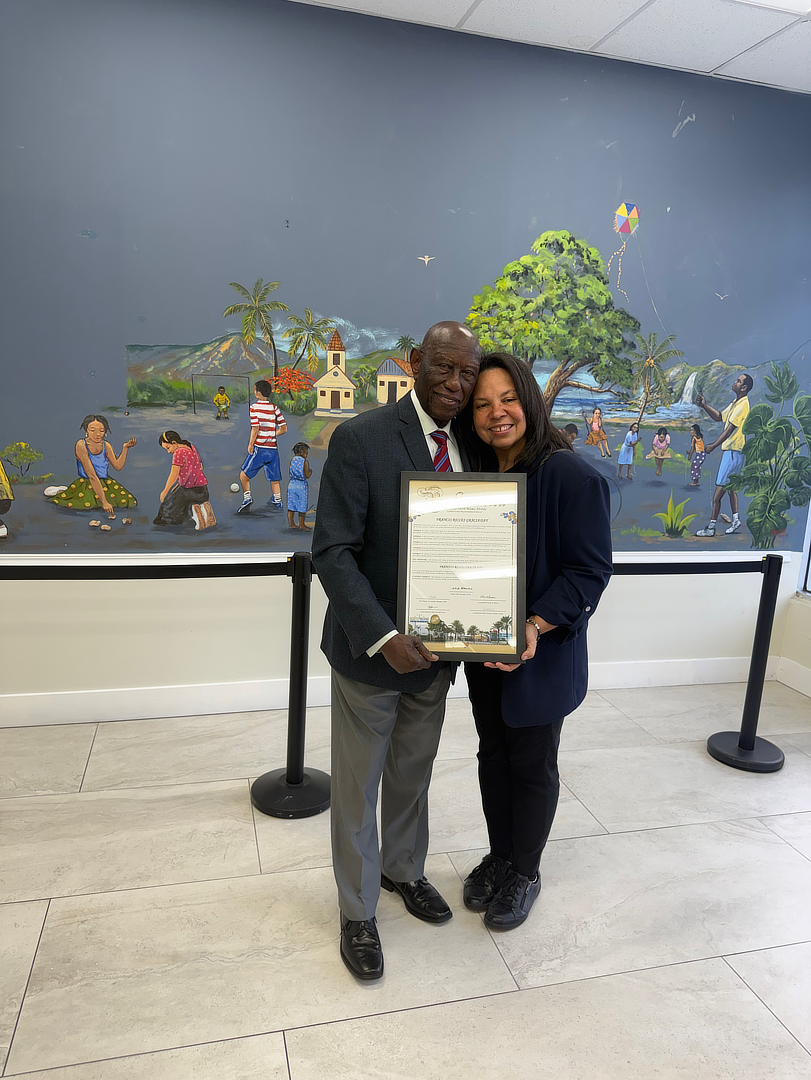
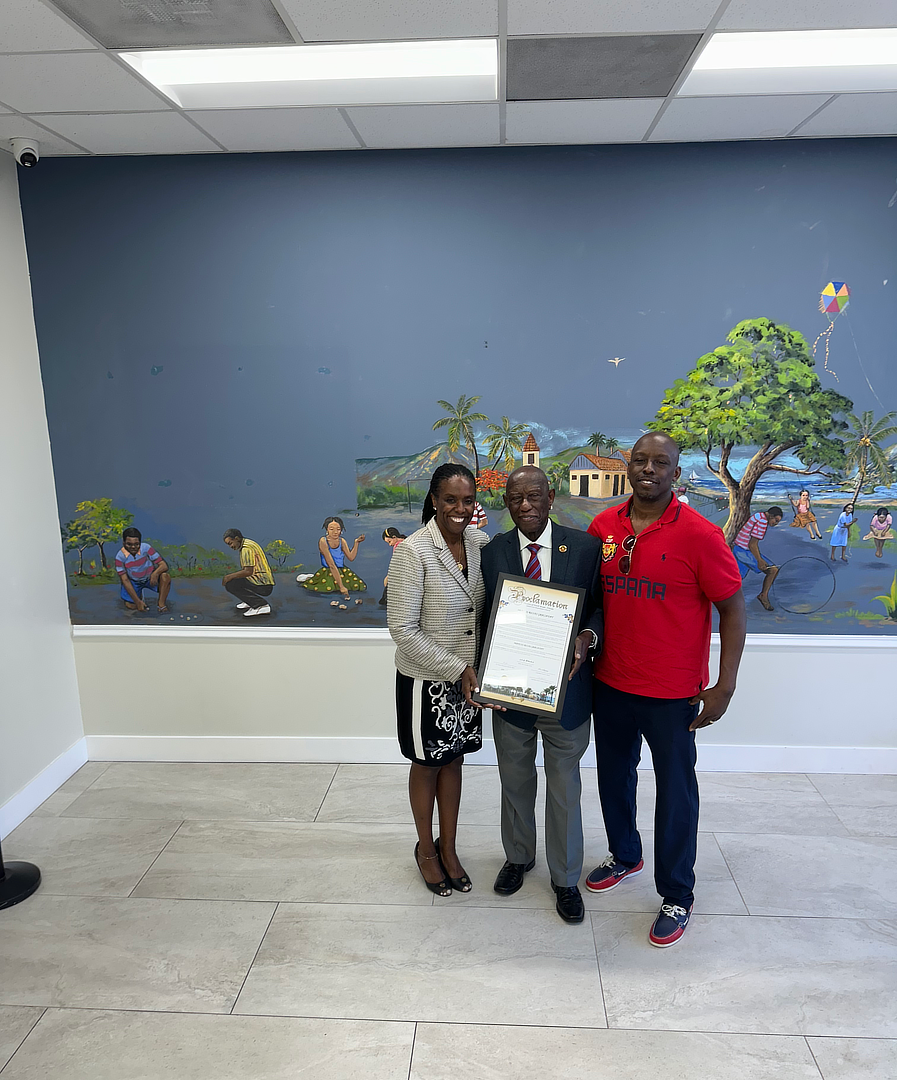
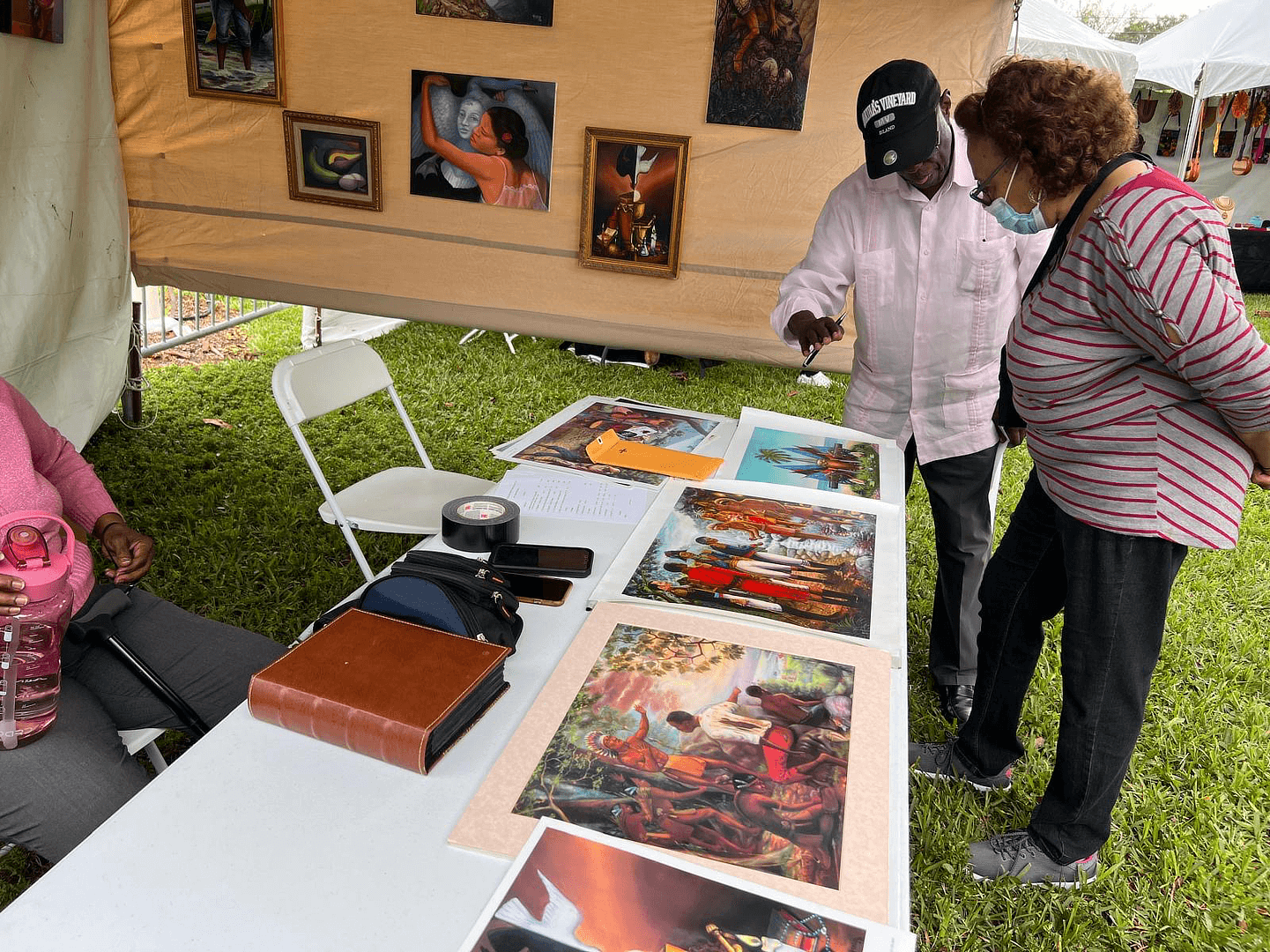
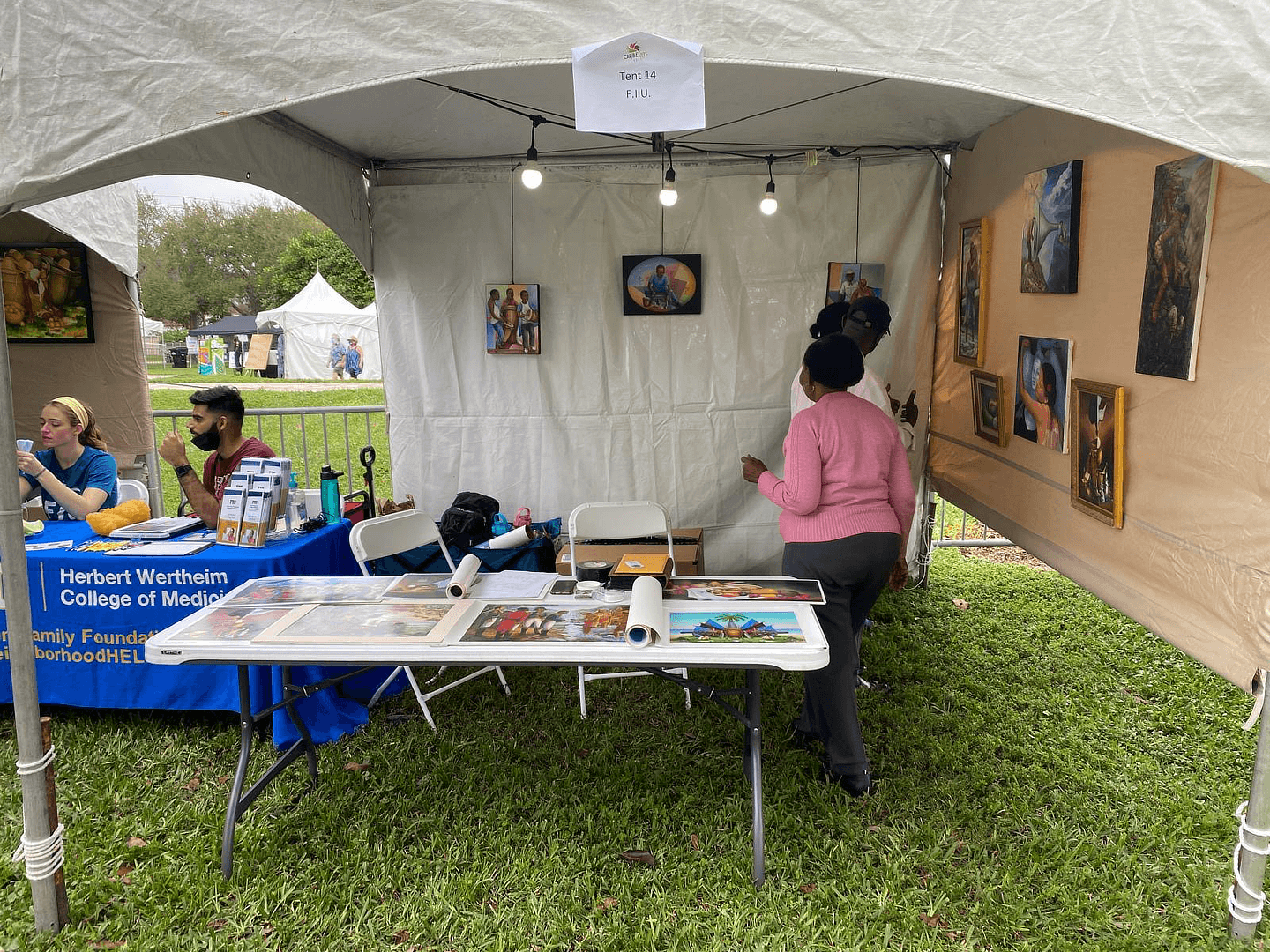
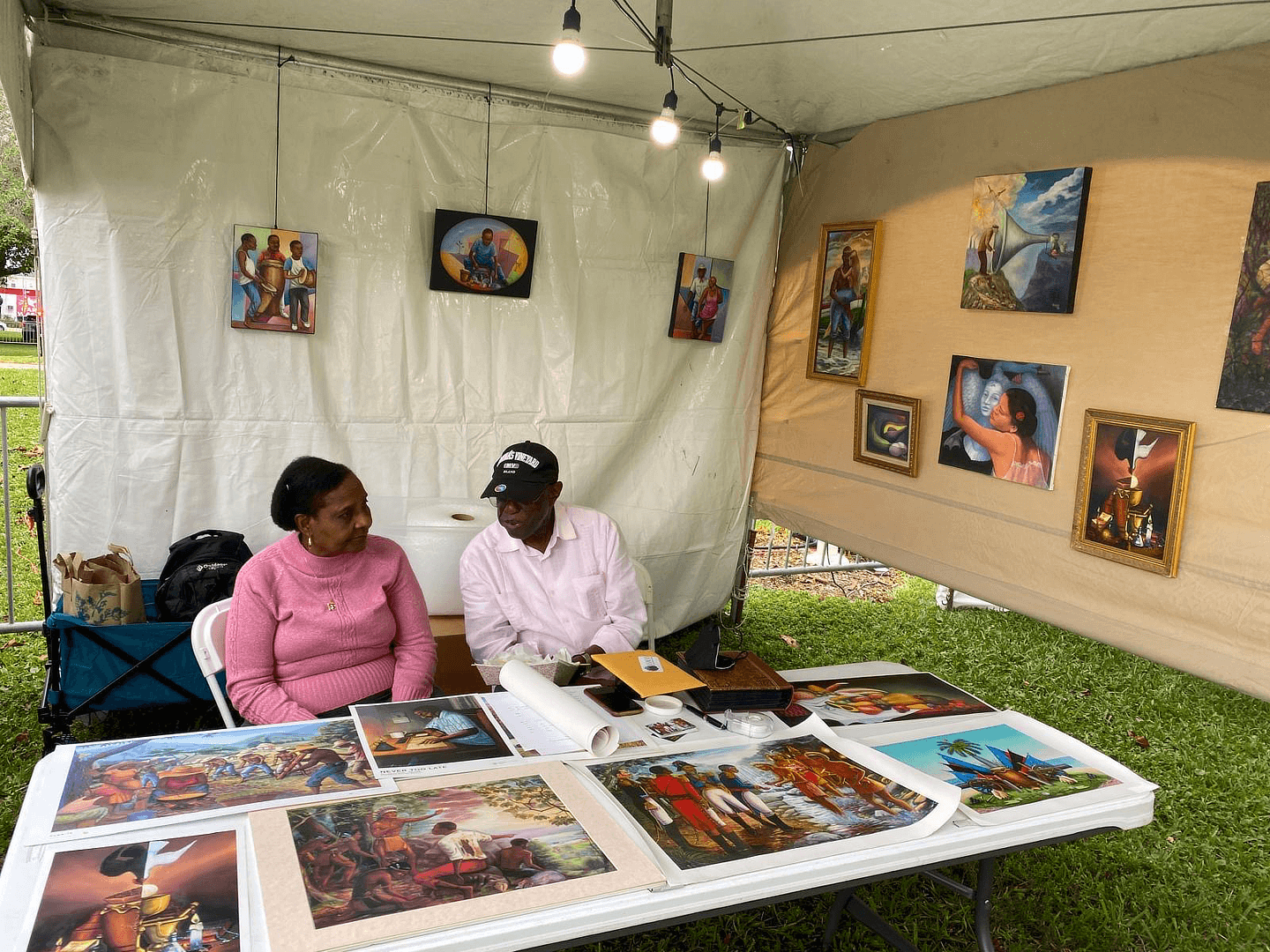
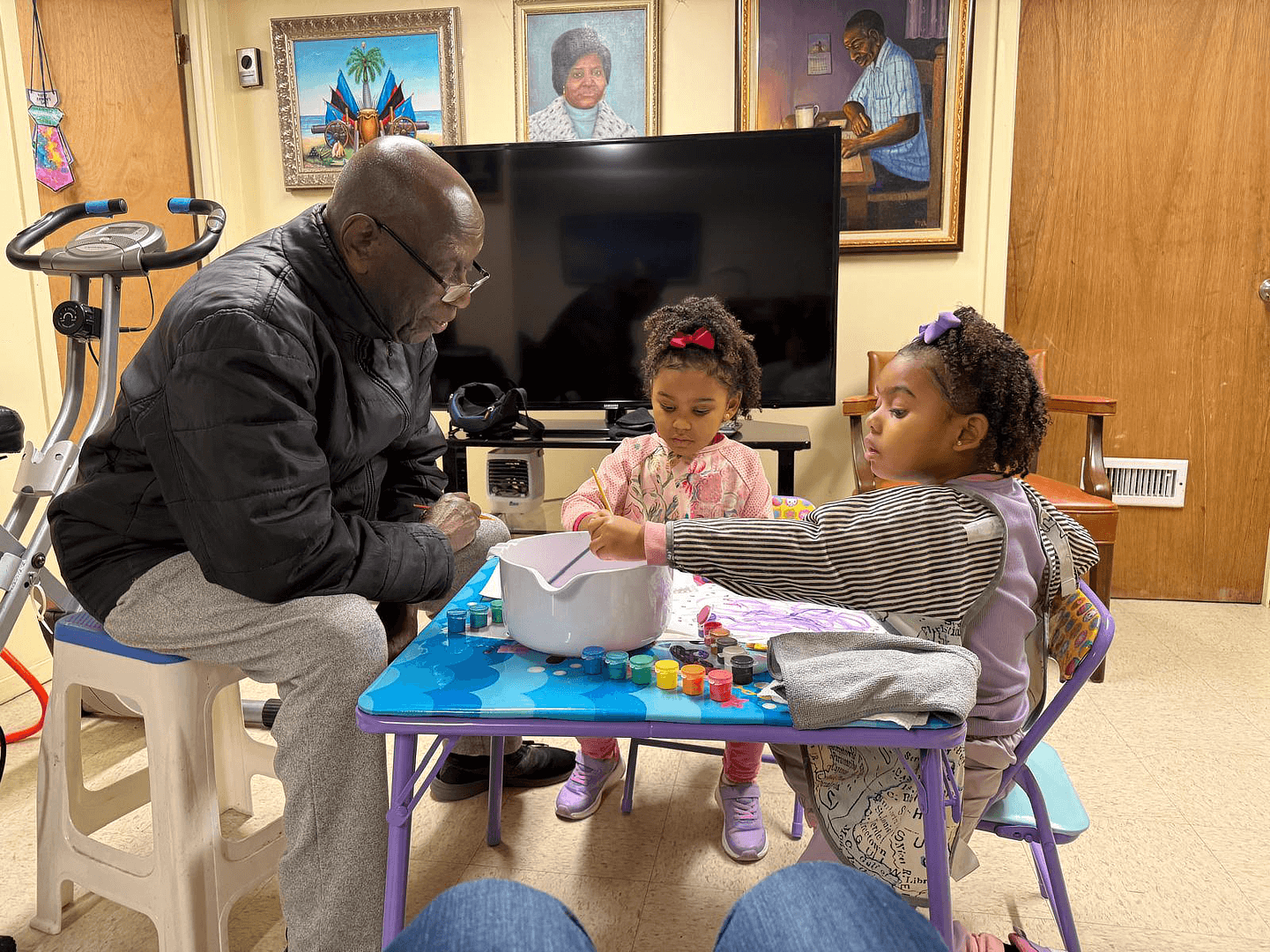
Dr. Gracia: Legacy Beyond the Canvas
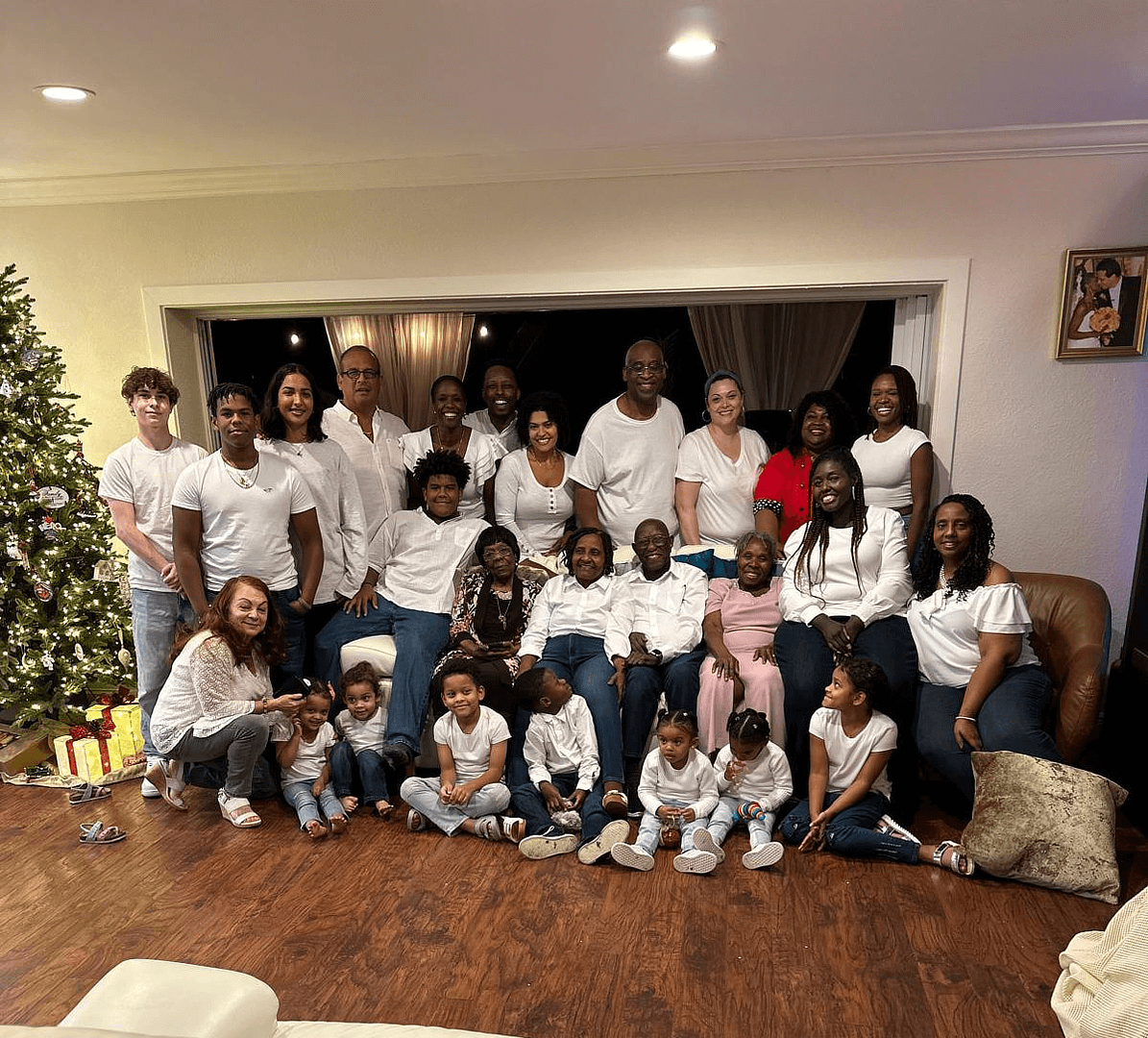
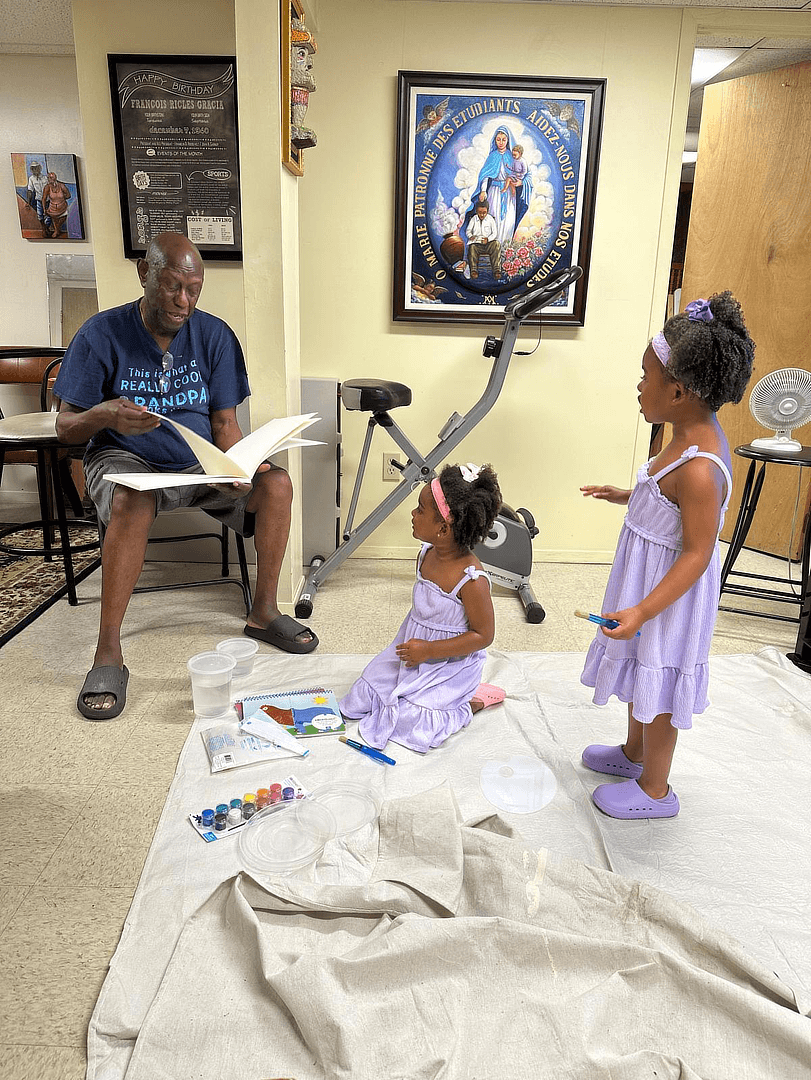
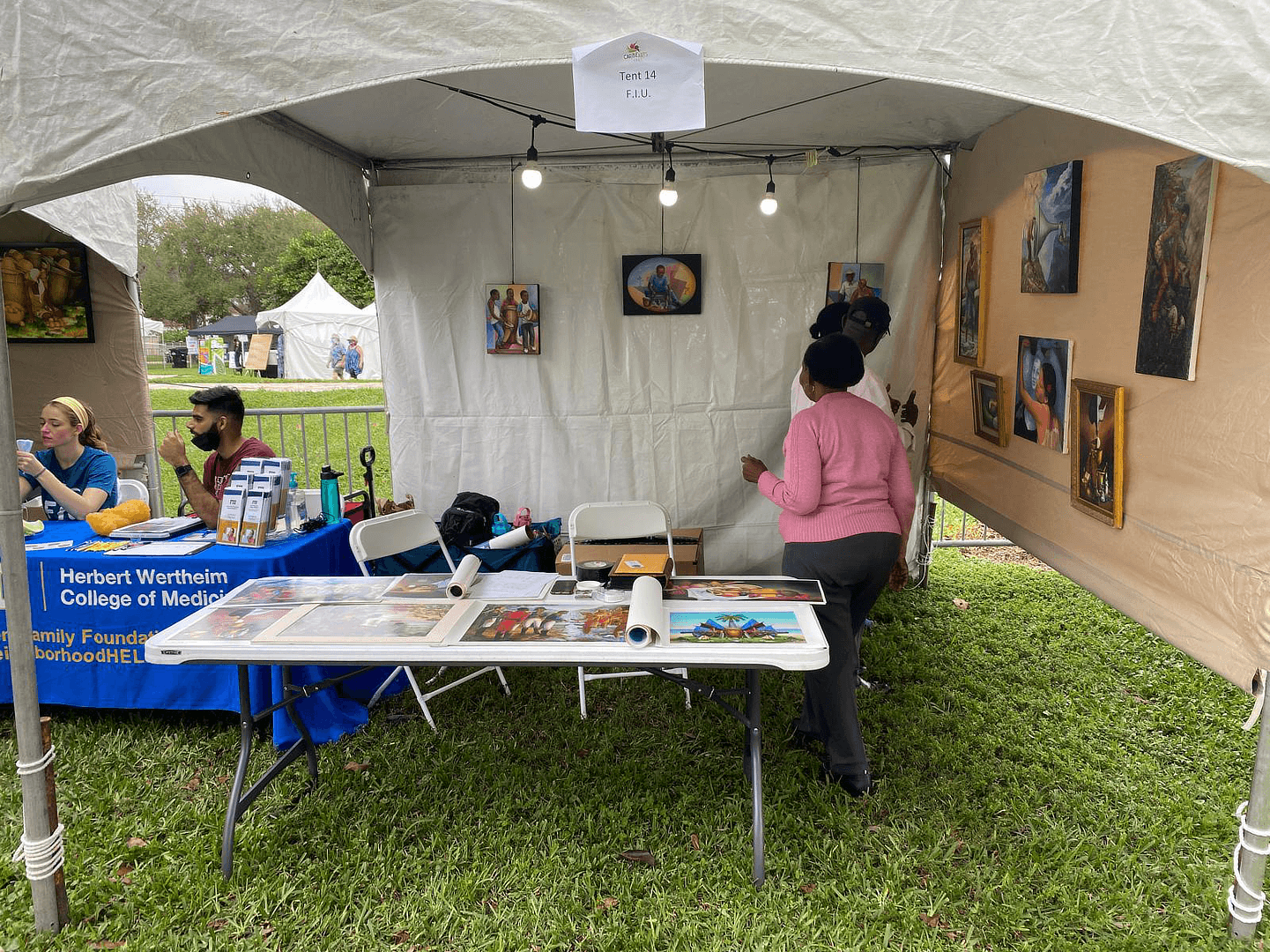
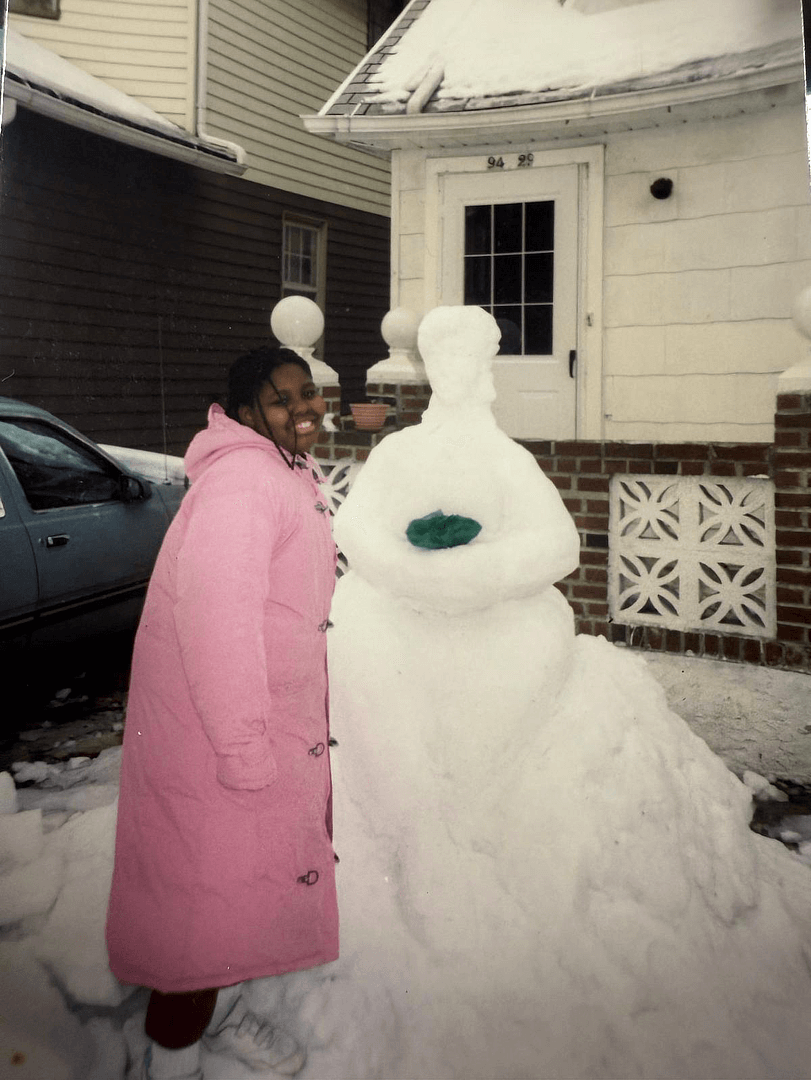

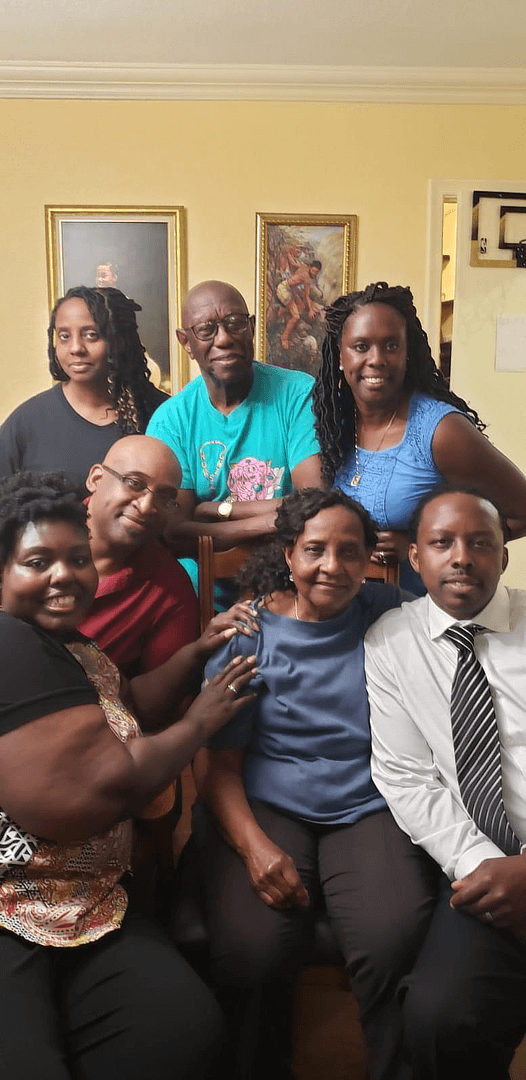
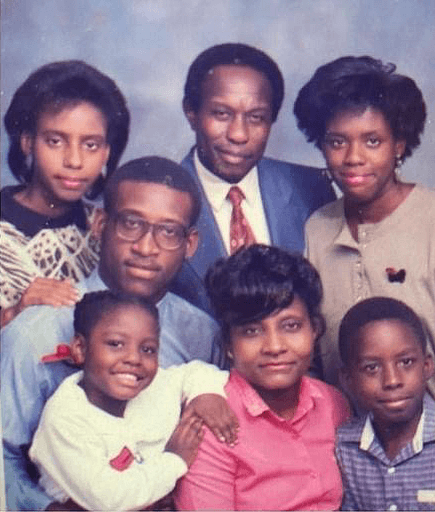
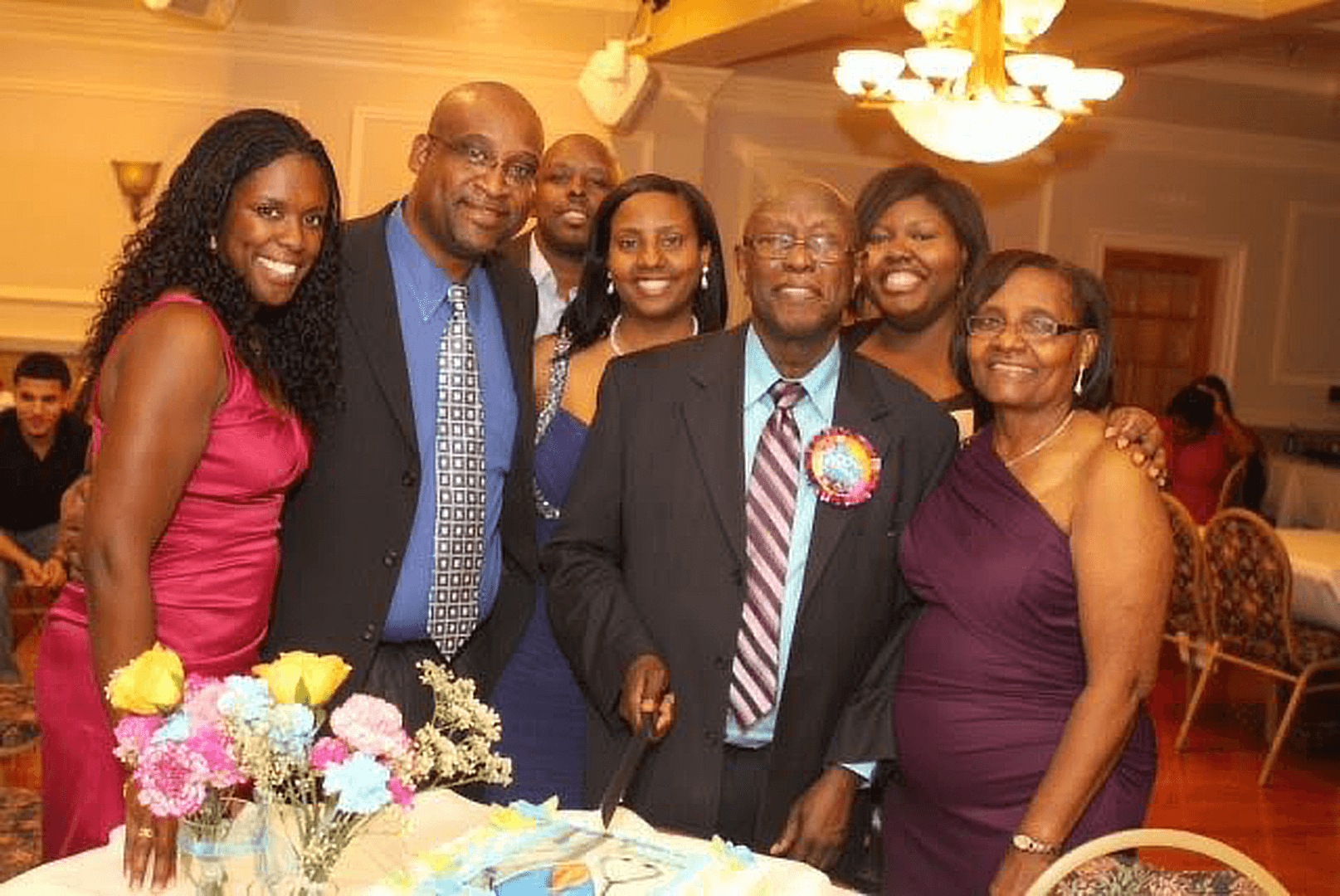
The Family